Punch the Monkey: The Abandoned Baby Macaque Who Won the World’s Heart
Rejected by his mother, bullied by his troop, comforted only by an IKEA stuffed toy — meet Punch, the baby macaque at Japan’s Ichikawa City Zoo whose journey to acceptance became February 2026’s most emotional viral story.
In a world rarely short of bad news, a small Japanese monkey with a stuffed toy and a stubborn will to belong became something the internet desperately needed in February 2026 — a story with a happy ending. This is the full story of Punch the monkey, told from the very beginning.
Who Is Punch the Monkey?
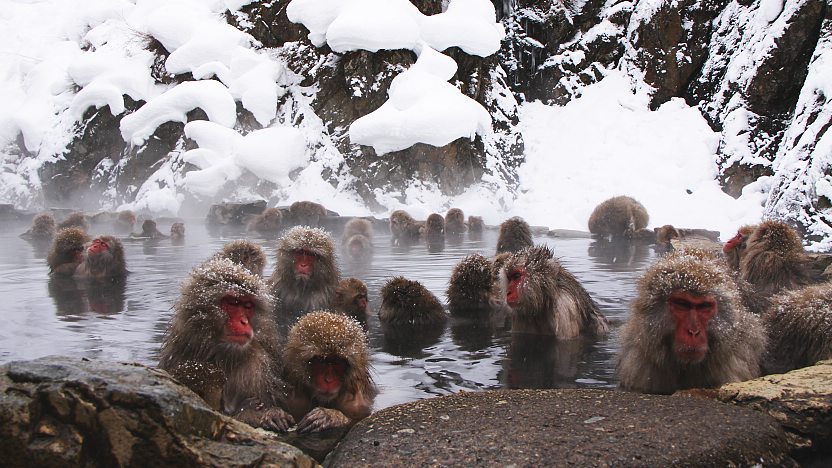
Punch is a Japanese macaque — known in Japan as Nihonzaru — born in July 2025 at Ichikawa City Zoo in Chiba Prefecture, just north of Tokyo. From the very beginning, his life was harder than most. His mother rejected him shortly after birth, leaving the tiny infant without the warmth, milk, and protection that infant macaques depend on entirely for their survival.
Zoo staff intervened quickly, hand-rearing Punch through the critical early months and keeping him healthy. But the real challenge came when the time arrived to introduce him to his own kind. On 19 January 2026, keepers formally brought Punch into the zoo’s Monkey Mountain enclosure — home to approximately 60 other Japanese macaques — hoping he would gradually integrate with the troop.
What followed was weeks of heartbreak that the entire world would soon be watching.
The Full Timeline: From Birth to Belonging
The IKEA Stuffed Toy That Captured the Planet
If there is a single image that defines Punch’s story, it is this: a tiny monkey barely bigger than a human fist, dragging an oversized stuffed orangutan plush across an enclosure floor, refusing to let go. The toy — an IKEA DJUNGELSKOG stuffed animal — was provided by zookeepers to give Punch something to cling to in the absence of his mother.
In both the wild and in captivity, infant macaques cling to their mothers almost continuously for the first months of life. Physical contact is not a luxury — it is neurologically essential for healthy development. Without it, infant primates suffer measurable psychological and physical harm. By giving Punch the plush toy, keepers were providing the closest available substitute: something with texture to grip, something that didn’t push back, something that was simply there.
Images of Punch and his toy spread first through Japanese social media, then exploded internationally. BBC News Asia and dozens of international outlets covered the story. TikTok videos of Punch clutching his plush while being shoved by larger troop members racked up millions of views. People weren’t just watching a cute animal clip. They were watching something that felt achingly, universally recognisable.
“He is the best celebrity we have had in a while.”
— Viral comment, widely shared across Reddit and X, February 2026The DJUNGELSKOG stuffed orangutan sold out across Japan within days of Punch’s story going global. On 17 February, IKEA Japan CEO Petra Färe visited Ichikawa City Zoo in person, donating 33 stuffed animals to the zoo — for Punch and for use in children’s areas. It was a rare moment where a corporate gesture felt entirely unforced and genuinely moving.
How Punch the Monkey Finally Found His Family: Onsing’s Hug
By mid-February 2026, Punch’s integration had begun showing cautious signs of progress. Zoo staff noted fewer avoidance incidents, brief periods of proximity with other troop members, and Punch spending more time in the main enclosure rather than retreating to its edges.
But nothing prepared the world for 20 February 2026.
On that date, footage captured an adult macaque named Onsing approaching Punch and drawing the small monkey into a firm, sustained embrace. Onsing then began grooming Punch — running fingers carefully through his fur in a behaviour that, among macaques, is one of the most significant social gestures possible. Grooming communicates trust. It signals that the groomer accepts the other animal as a genuine member of the social group. In primate terms, it is a profound and public act of welcome.
The clip was first shared on X by user @dondawastaken. Within 24 hours it had been viewed tens of millions of times. News outlets including the BBC, CNN, and the Daily Mail covered the story. The hashtag #HangInTherePunch briefly became the most-used animal hashtag globally.
“Todays, Punch-kun is full of love… getting hugged and groomed a lot. Seeing him gradually fitting in little by little, I’m really so glad.”
— Ichikawa City Zoo staff post, 20 February 2026For primatologists, the significance of Onsing’s intervention cannot be overstated. In macaque social hierarchies, taking a vulnerable individual under protection carries real social risk for the protector. Onsing was not just being kind in any human sense — Onsing was making a visible, public statement to the entire troop about Punch’s status within it.
Why Did Punch’s Story Resonate Worldwide?
In a media environment dominated by conflict and anxiety, the story of a small rejected animal slowly finding belonging activated something deep and cross-cultural. Analysts at Forbes described Punch as a “relatable outsider” — a figure whose experience of isolation, longing for acceptance, and eventual embrace by community mapped onto experiences that are fundamentally human, even though Punch himself is not.
Social media communities formed with remarkable speed. Fan accounts provided daily updates on Punch’s progress, translated Japanese zoo posts for international audiences, and created art, memes, and messages of support. Reddit threads drew heartfelt posts from users who described their own experiences of rejection and exclusion, finding something real in a baby monkey’s perseverance.
The Science of Why We Care
Psychologists point to several overlapping mechanisms. First, anthropomorphism: humans instinctively project emotions onto animals displaying attachment behaviours, and Punch — clutching his toy, being shoved away, circling the group from the outside — provided an almost theatrical emotional narrative. Second, the story arc was unusually clean: rejection, struggle, persistence, acceptance. That is the shape of stories humans are evolutionarily primed to find meaningful. And third, in early 2026’s global mood, a story with a genuinely happy ending was simply rare enough to feel extraordinary.
Experts interviewed by the BBC Science desk noted that the behaviours seen in early videos — adults disciplining and excluding Punch — were largely normal macaque socialisation. Rejection and boundary-setting are how troop hierarchies get established, and infants must learn the rules through experience. What looked like bullying was, in many cases, Punch receiving a necessary social education. Onsing’s acceptance suggests it is working exactly as it should.
Ichikawa City Zoo: Record Visitors & Global Attention
For Ichikawa City Zoo — a municipal facility in Chiba Prefecture not historically known as a major tourist destination — the scale of global interest in Punch has been genuinely transformative. Visitor numbers broke records multiple times throughout February. On one mid-February weekend, more than 100 visitors were recorded crowded around the Monkey Mountain enclosure simultaneously, many having driven hours for the chance to see Punch in person.
One visitor, 32-year-old Sayaka Takimoto, told local media she and her husband had driven two hours specifically to see him. Crowds were heard chanting “hang in there!” at the enclosure in Japanese — the living, breathing echo of the hashtag that had become Punch’s global rallying cry.
The zoo has been careful and transparent throughout, posting regular updates that staff and volunteers rapidly translated for international audiences. Their communications have consistently provided the scientific context viewers needed — neither minimising the difficulty of Punch’s early weeks, nor overstating what was simply normal primate behaviour.
Where Is Punch Now? Update: 26 February 2026
As of today — Thursday, 26 February 2026 — Punch is continuing his integration with the Monkey Mountain troop at Ichikawa City Zoo, and the trajectory remains positive. Zoo staff have confirmed that the number of individual monkeys Punch interacts with on a daily basis continues to grow. Onsing remains a consistent and protective figure in his life.
The journey is not over. Full acceptance within macaque social structures is a gradual process that unfolds over months, not days. Setbacks will likely still occur. But the milestone of 20 February — that embrace, that grooming session, that public declaration of belonging — represents something that cannot be undone. Punch is no longer on the outside looking in.
The world, it turns out, needed to watch a small monkey be hugged. And in watching it — in the tens of millions of views, the Reddit communities, the fan art, the IKEA sell-out, the record zoo attendance, the grown adults standing at an enclosure shouting “hang in there” at a seven-month-old macaque — something entirely genuine was communicated: that the desire to belong is not peculiar to any one species, and that when belonging finally arrives, it is worth every hard day that came before it.
Hang in there, Punch. You made it. 🐒
© 2026 IncomeProtect.co.uk · All rights reserved · Privacy Policy · Terms
Published Thursday 26 February 2026 · Last updated 26 February 2026
Focus keywords: punch the monkey · punch monkey · baby monkey punch · punch monkeys