

AI disruption stock market concerns are front and center today, as investors grapple with the dark side of artificial intelligence’s rapid rise. On Thursday, February 12, 2026, major U.S. indices suffered significant declines amid fears that AI could automate jobs, compress margins, and render certain business models obsolete. The Dow Jones Industrial Average plunged 669 points (1.3%) to close at 49,451.98, while the S&P 500 dropped 1.57% and the Nasdaq Composite fell 2.03%. This broad selloff reflects growing anxiety over AI’s disruptive potential across multiple sectors.
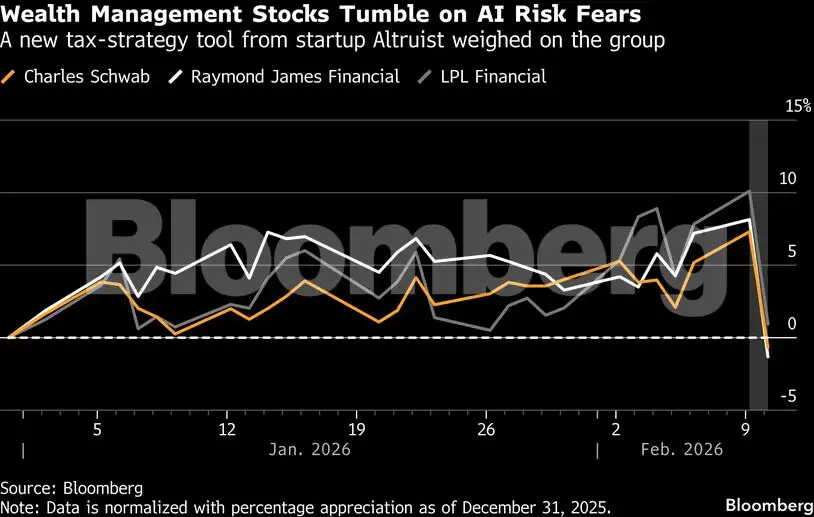
US stock market | Wall Street’s new trade is dumping any stock in AI’s crosshairs – The Economic Times
Table of Contents:
The Root of the AI Disruption Stock Market Turmoil
The selloff intensified after disappointing updates from companies like Cisco Systems, which fell sharply on weak guidance tied to enterprise tech spending. But the real driver is broader AI disruption stock market fears: investors are actively “hunting for losers” — companies that could lose out as AI boosts efficiency in areas like freight logistics, software services, and advisory services.
- Software stocks extended losses, with the S&P 500 Software and Services Index breaking below key technical levels, signaling oversold conditions not seen since 2022.
- Logistics firms like C.H. Robinson tumbled 14% on news of AI tools promising to revolutionize freight operations.
- Wealth management and financial stocks weakened as AI threatens to automate advisory roles and tax strategies.

US software stocks slammed on mounting fears over AI disruption, lose $1 trillion in week | Reuters
This rotation highlights a shift: enthusiasm for AI enablers (like chipmakers) gives way to caution about disruption victims. Defensive plays in consumer staples gained, while riskier sectors bore the brunt.
Global Ripple Effects and What’s Next
Asian markets tracked the declines on February 13, with tech-heavy indices falling as AI disruption stock market sentiment soured. In Australia, the ASX endured heavy selling, partly blamed on “Friday the 13th” jitters amplifying the trend.
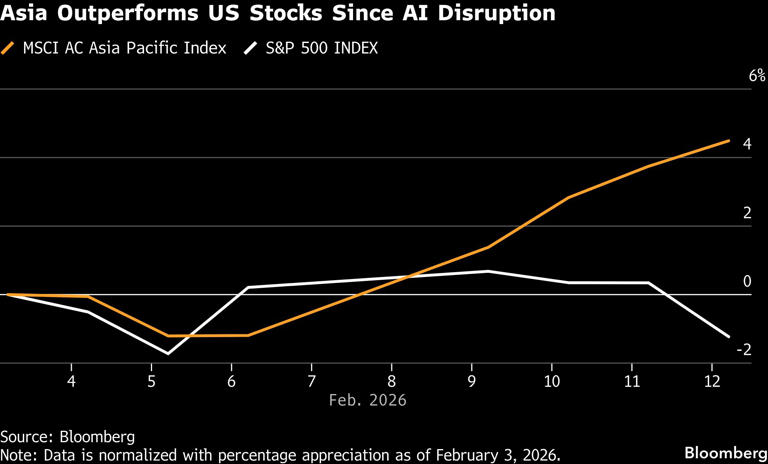
AI angst in US stocks sends global money chasing Asia’s winners
Traders now eye the January CPI inflation report, due today, for clues on Federal Reserve policy. If inflation eases as expected, it could provide relief; otherwise, volatility may persist.

Stock Market Crashed on AI Spending Fears – Tech Stocks Extend Losses as VIX Jumps
Meanwhile, generative AI continues transforming finance through fraud detection, risk assessment, algorithmic trading, and more — offering long-term opportunities despite short-term pain.
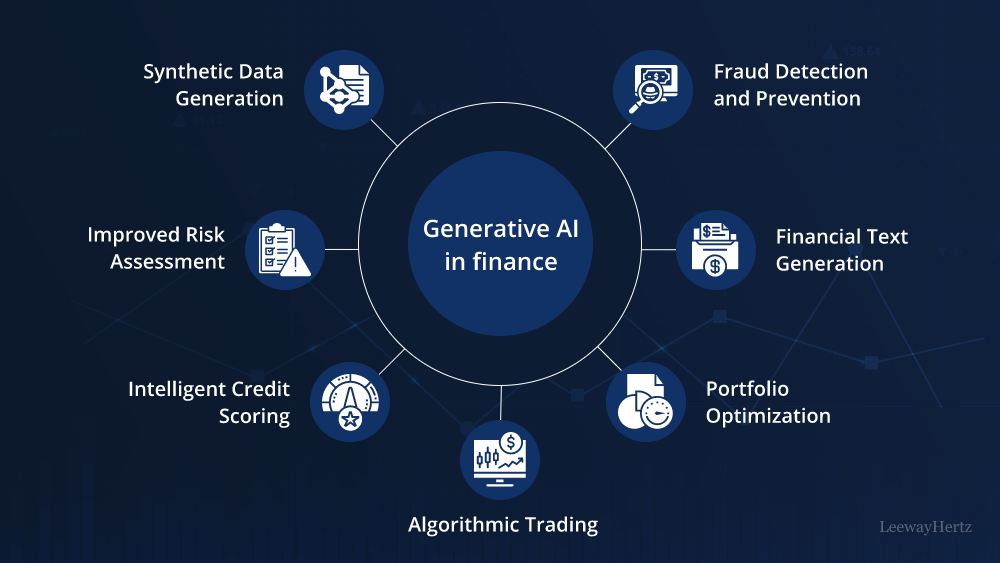
Generative AI in finance and banking
Investor Takeaways in the AI Disruption Stock Market Era
Diversify away from vulnerable sectors toward AI-resilient or beneficiary areas like hardware providers. Monitor earnings seasons closely, as more companies reveal AI exposure. While turbulence feels intense, historical tech disruptions (from printing press to modern innovations) show adaptation often leads to growth.
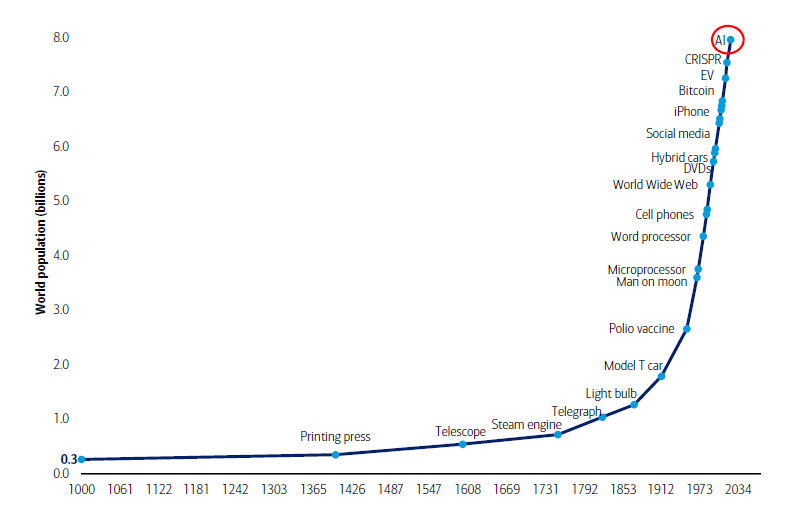
Two charts demonstrating 1,000 years of tech disruption | Trustnet
The AI disruption stock market story is evolving fast — stay vigilant, as today’s fears could become tomorrow’s opportunities in a reshaped financial landscape.
:max_bytes(150000):strip_icc()/disruptive-technology.asp-final-50564c66b819471192ab7fbc88d07ae7.png)
Understanding Disruptive Technology: Examples and Investment Strategies
Broader Implications for Finance and Beyond
While Wall Street grapples with AI disruption fears, the conversation on platforms like X (formerly Twitter) paints a mixed picture. Posts today highlight optimism in decentralized finance (DeFi) and crypto, with users touting projects like WhiteWhale and $Egg as the “future of finance.” This contrast underscores a divide: traditional markets fear job losses and revenue hits from AI, while blockchain enthusiasts see it as an opportunity for innovation.
Other news adding layers include Goldman Sachs’ top lawyer stepping down amid Epstein-related documents, and recommendations for resilient stocks like Tata Power and Manappuram Finance in volatile times. Undiscovered gems in small-cap stocks also show promise, with low debt and steady growth in banks like Franklin Financial Services.
What Should Investors Do Next?
For those navigating this AI disruption stock market volatility, diversification is key. Consider shifting toward AI-resistant sectors or even AI enablers like chipmakers. Monitor the upcoming CPI data closely, as it could either ease or exacerbate these fears. Long-term, AI might boost efficiency, but short-term turbulence seems inevitable.
Stay informed as this story evolves—AI disruption isn’t going away, and neither is its impact on finance.


